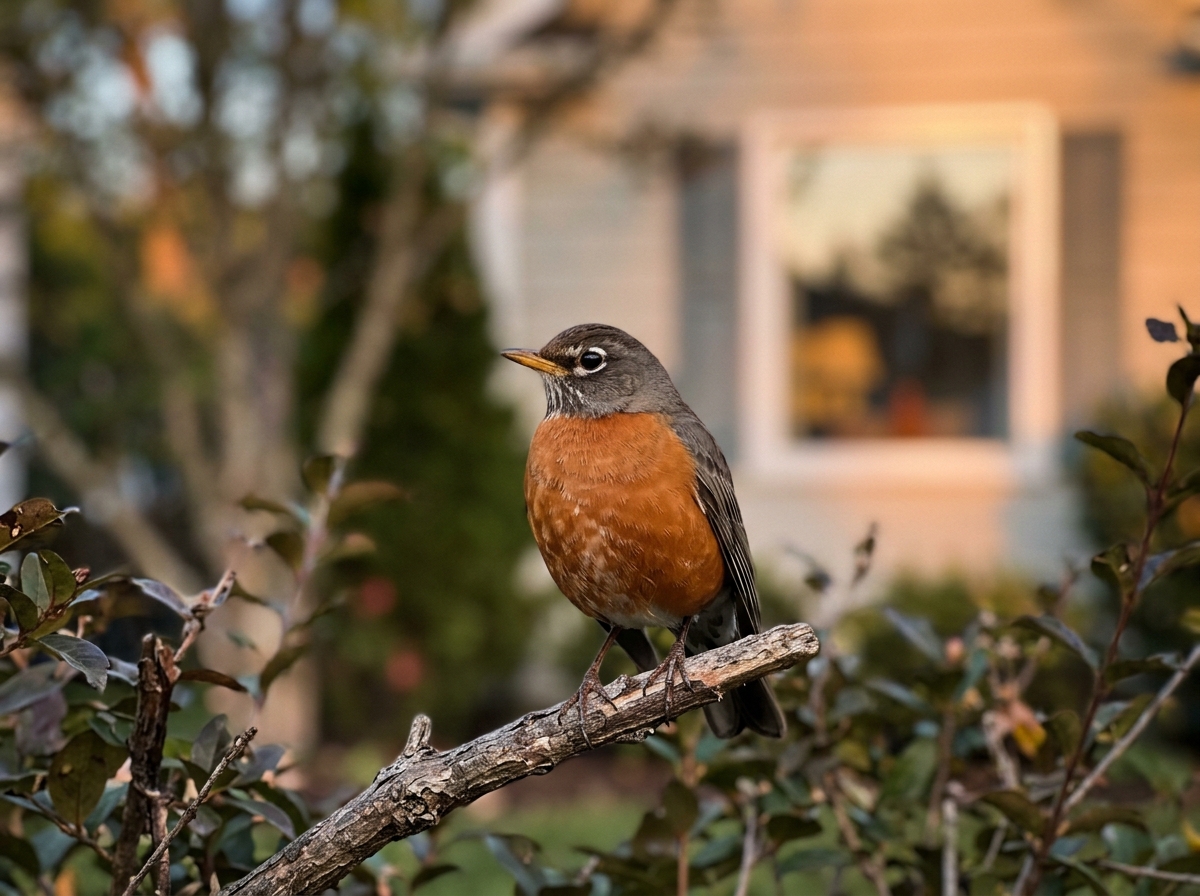
"Bird woman" can mean a lot of different things depending on where you encountered the phrase. It might refer to a historical figure, a slang label someone dropped in a group chat, a mythological archetype from folklore, or a vivid figure you met in a dream. The meaning shifts completely based on context, and there is no single universal answer. What this article does is walk you through the most likely interpretations, give you a way to figure out which one fits your situation, and tell you what to do with that interpretation once you have it.
Bird Woman Meaning: Dreams, Slang, Spiritual Symbolism

Marcus Holloway
23 Mar 2026
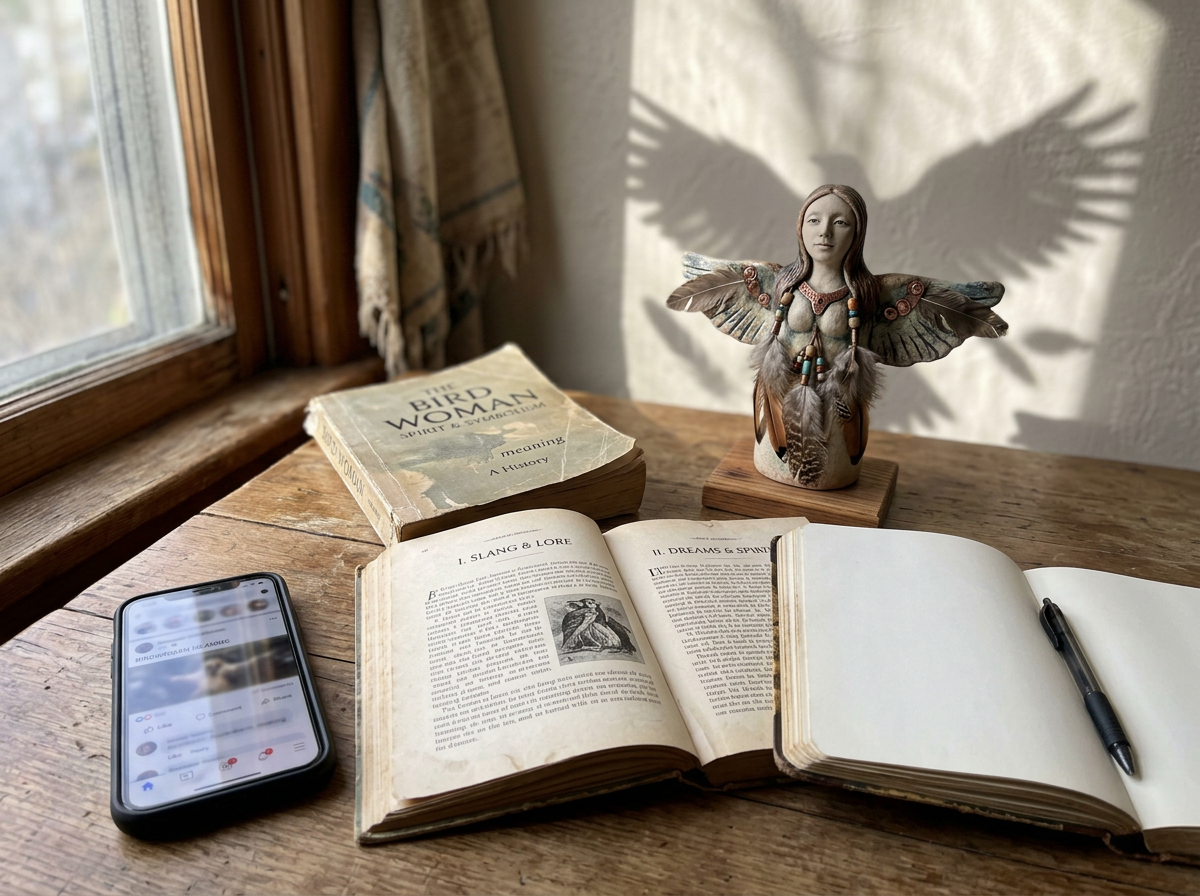
What people usually mean by "bird woman"
The most historically grounded use of "bird woman" is as a direct translation of the name Sacagawea. In the Hidatsa language, Sacagawea is a compound of two nouns: "cagáàga" meaning "bird" and "míà" meaning "woman." The U.S. National Park Service and Encyclopaedia Britannica both confirm this translation. Sacagawea, the Lemhi Shoshone woman who guided the Lewis and Clark Expedition, is literally named "Bird Woman," and that title carries enormous cultural weight in Indigenous American history. If you encountered "bird woman" in a historical, educational, or Indigenous cultural context, this is almost certainly what's being referenced.
The second common usage is as a nickname or descriptor for a person who has a strong affinity for birds. Someone might call a neighbor who feeds dozens of sparrows every morning the "bird woman" on their street, or a character in a book might earn the label because she rescues injured raptors. In everyday speech, this usage is neutral to affectionate and is about observable behavior, not symbolism.
There is also the mythological usage, where "bird woman" describes a supernatural female figure who can shift between human and bird form. This appears across many traditions and folklore systems globally, and it is distinct from both the historical and slang meanings. More on that in the folklore section below.
How it shows up in slang and on social media
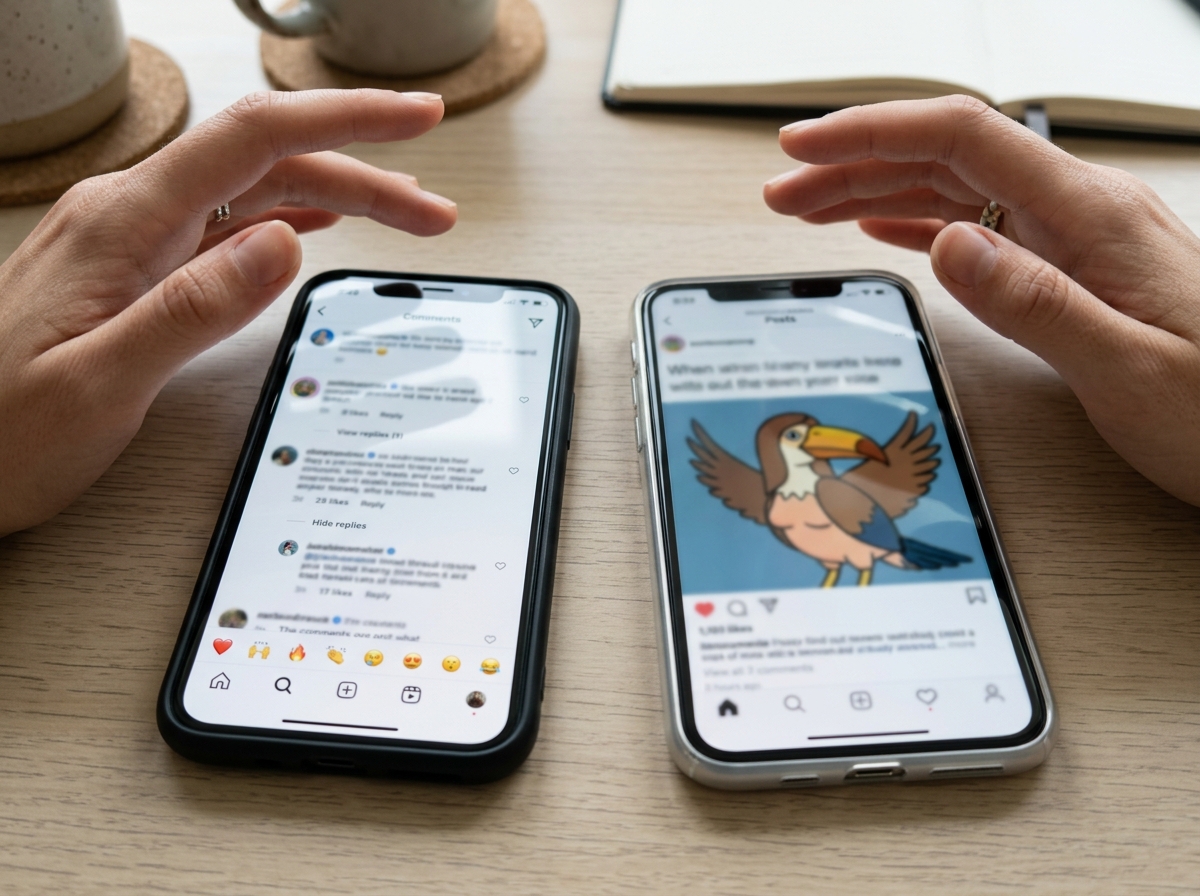
On social media and in casual conversation, "bird woman" does not have one locked-in slang definition the way a term like "bird" alone sometimes does. If you are already familiar with [bird meaning slang](/bird-symbolism/bird-meaning-slang) in slang contexts (where "bird" on its own can function as British slang for a woman, or as street slang in some communities), adding "woman" changes the register. It often becomes less of a coded term and more of a descriptive label, sometimes affectionate and sometimes dismissive. On social media and in casual conversation, "bird woman" does not have one locked-in slang definition the way a term like "bird" alone sometimes does. If you are already familiar with [<a data-article-id="D7DA8C74-14B0-4769-A640-F18C378EFE7F">bird meaning slang](/bird-symbolism/bird-meaning-slang) in slang contexts (where "bird" on its own can function as British slang for a woman, or as street slang in some communities), adding "woman" changes the register. bird mom meaning</a>. bird meaning woman. bird lady meaning
There is a Reddit thread from the r/teenagers community where someone was called "a bird woman" by peers and had no idea what it meant. The responses were varied, which is itself telling: people interpreted it as a quirky compliment (someone who is free-spirited or a little eccentric), as a reference to someone who talks a lot ("chirping" constantly), or simply as a weird nickname with no deep meaning at all. That ambiguity is actually the norm for this phrase on social platforms.
In some online communities, especially those built around spiritual aesthetics, witchcraft, or cottagecore imagery, "bird woman" is used as a positive archetype: the wild-haired woman with ravens on her shoulders, the healer who lives at the edge of the forest. Here it is more of a vibe or aesthetic label than an insult. In other contexts, particularly when someone uses it with a dismissive tone, it can read as calling someone odd or overly obsessive about birds. Pay attention to tone and community context when you see it used this way.
Spiritual and folklore interpretations
Across world mythology, the "bird woman" as a spiritual figure is one of the oldest archetypes you will find. She represents transformation, the liminal space between earth and sky, and often carries messages between the mortal world and something beyond it.
The Swan Maiden tradition

The Swan Maiden is one of the most widely distributed folklore motifs on the planet, appearing in European, Asian, and Indigenous traditions. In this story type, a supernatural woman shifts between human and bird form using a feathered cloak or garment. When the garment is stolen, she is trapped in human form and often forced into a marriage or domestic life she did not choose. When she recovers it, she returns to the sky. Spiritually, this figure is interpreted as a symbol of freedom that cannot be permanently contained, of intuition and wildness that survives suppression, and of the cost of trying to control something that belongs to a different realm.
The Goose Wife in Inuit tradition
A related motif categorized as the "Goose Wife" appears in Inuit tales. In these stories, a group of bird women (typically swans or geese who have taken human form) descend to an earthly lake. A man steals one woman's feather garment, forcing her to stay and marry him. Eventually she recovers her feathers and flies back to her world. This is not just a love story: it is a story about the spiritual danger of holding onto something that does not belong to the human world, and the inevitable return of a being to her true nature.
Bird women as guides and messengers
In many spiritual frameworks, a bird woman appearing as a guide or presence is interpreted as a messenger. Birds already carry strong symbolism as intermediaries between worlds (sky and earth, living and dead, known and unknown), and when that energy is combined with a feminine form, the figure often represents prophecy, intuition, or protective guidance. Think of the Valkyries in Norse mythology, who were sometimes described with avian features, or various bird goddesses across Celtic, Egyptian, and Native American spiritual traditions. The specific bird species matters enormously in these readings, and we will come back to that in the disambiguation section.
Cultural symbolism: birds, women, and what they share
When you combine bird symbolism with the cultural themes historically associated with womanhood, several symbolic threads emerge consistently across traditions. Birds are linked to freedom, voice, intuition, the soul, and the ability to move between worlds. Women in mythology and folklore are frequently associated with the same qualities: prophecy, nurturing, transformation, and liminal knowledge. The pairing amplifies both sets of meanings.
A woman associated with birds in cultural symbolism tends to represent one or more of the following: a prophet or seer (the woman who knows what is coming before others do), a nurturer (the one who tends to fragile things and coaxes them toward life), an independent spirit (someone who refuses to be caged), or a mediator between worlds (the healer, the shaman, the wise woman at the threshold). The specific tradition shapes which of these is emphasized.
It is also worth noting that the historical figure of Buffalo Bird Woman (Waheenee), a traditional Hidatsa woman who lived from around 1839 to 1932, carried a bird-related name that connected her to her community's relationship with the natural world. Her name and legacy reflect how bird-woman pairings in Indigenous naming traditions often signal a specific, respected relationship between a person and the living world around them, not just abstract symbolism.
Dreaming of a bird woman: what it might mean
Dreams involving a "bird woman" are among the more striking and memorable dream experiences people report, and they do tend to carry emotional weight. Before jumping to a spiritual interpretation, though, it helps to think clearly about what actually happened in the dream and how it felt. Dream interpretation is not a precise science, but patterns do show up consistently.
Common bird woman dream scenarios

| Dream scenario | Common interpretation | What to reflect on |
|---|---|---|
| A woman with wings or feathers who speaks to you | A message from your intuition or subconscious; a guide figure | What did she say or communicate? What feeling did you wake up with? |
| A woman transforming into a bird (or back) | Personal transformation; a desire for freedom or a fear of losing yourself | Are you currently in a major life transition? Feeling trapped or about to be free? |
| A bird woman who is frightening or threatening | Unresolved tension around independence, control, or a powerful figure in your life | Who in your waking life might this figure represent? |
| A bird woman you are chasing or trying to reach | Longing for freedom, creativity, or a quality you feel is out of reach | What does she have or represent that you want? |
| A bird woman who protects or guides you | A nurturing or wise presence; processing grief for someone lost, or seeking direction | Is there a mentor, ancestor, or inner voice you have been ignoring? |
The bird species matters in dream interpretation just as it does in waking symbolism. An owl-woman carries different associations (wisdom, night, mystery) than a crow-woman (transformation, intelligence, shadow) or a dove-woman (peace, grief, spiritual comfort). If you remember the bird clearly, factor that into your reading. If the bird was generic or unclear, focus more on the emotional tone of the encounter.
One thing I want to be direct about: dreams involving a bird woman are not reliable omens about external events. They are almost always more useful as a mirror for your inner state than as a prediction. Treating a dream as a literal prophecy is one of the most common mistakes people make, and it tends to lead to anxiety rather than insight. Use the dream as a prompt for reflection, not a forecast.
How to figure out what it means in your specific situation
Because "bird woman" can mean so many different things, the single most useful thing you can do is ask yourself four questions in order. Your answers will narrow the meaning down quickly.
- Where did you encounter it? A history book or monument points to Sacagawea. A social media post or text message points to slang or a label. A dream points to personal symbolism. A piece of mythology, spiritual writing, or folklore points to archetype.
- What was the tone? Respectful and historical, or casual and jokey? Awe-inspiring and mysterious, or dismissive? The emotional register tells you a great deal about the intent.
- Was a specific bird species mentioned or implied? Species matters. A raven woman, a swan woman, and a hummingbird woman carry completely different symbolic weight in both folklore and dream traditions.
- What feelings came with it? Whether you read it in a post, heard it said about someone, or experienced it in a dream, your gut reaction is data. Did it feel like a compliment, an insult, a warning, a revelation, or something neutral?
Once you have worked through those four questions, you should be able to match your experience to one of the contexts covered in this article: historical reference, everyday nickname, slang label, folkloric archetype, or personal dream symbolism. If more than one seems to fit, that is fine. Meanings overlap sometimes, and holding more than one interpretation lightly is more useful than forcing a single answer.
Misconceptions worth clearing up
The biggest misconception I run into is the assumption that "bird woman" is a fixed, universal spiritual omen with one agreed-upon meaning. It is not. It is a phrase that draws meaning from the context around it, not from some intrinsic spiritual dictionary. Treating any "bird woman" encounter as automatically meaningful (or automatically meaningless) is a mistake in either direction.
Another common error is conflating the slang meaning of "bird" (which has its own distinct meanings depending on cultural context, as covered in related discussions of bird meaning in slang) with "bird woman" as a compound phrase. They do not carry the same meaning, and assuming they do will lead you in the wrong direction. "Bird" in British or street slang can be a standalone term for a woman, but "bird woman" used as a full phrase usually functions differently, either as a descriptive label, a mythic reference, or a nickname. bird gang meaning
People also sometimes assume that because Sacagawea means "Bird Woman," any use of the phrase is a reference to her. That is not accurate. The Hidatsa meaning of her name is historical and linguistic context; it does not mean that every time someone says "bird woman" they are invoking her legacy. Be precise about where the reference actually comes from.
Finally, there is a tendency to treat dream encounters with a bird woman as prophetic or as a communication from an external spiritual entity. Dream interpretation across most traditions, including many Indigenous and shamanic frameworks that people often cite for this, treats dreams as coming from within: from memory, emotion, intuition, and the subconscious processing of waking experience. That does not make a vivid bird woman dream less meaningful. It actually makes it more personally relevant, because the meaning belongs to you rather than to some outside force.
What to do with the meaning once you have it
If your "bird woman" encounter was historical or educational, the most useful next step is learning more about the specific tradition or figure involved. For Sacagawea and the Hidatsa tradition, go to primary sources and Indigenous-authored material rather than popularized accounts, which often flatten or romanticize the actual history.
If it was slang or social, consider the relationship and intent of the person who used it. A nickname like this is usually more about the person saying it than some deep meaning. Decide if it fits, if it bothers you, or if it is just noise.
If the meaning you landed on is spiritual or folkloric, sit with the archetype rather than acting on it immediately. Bird woman figures in mythology are about transformation and freedom: good questions to ask yourself are whether you feel constrained in some area of your life, whether you are in the middle of a significant change, or whether you have been ignoring some instinct or calling. The folklore does not tell you what to do. It prompts you to ask the right questions about your own situation.
If it was a dream, journaling the details immediately after waking is the most practical tool available. Write down the species, the setting, the bird woman's behavior, and your emotional state both in the dream and when you woke up. Patterns across multiple dreams are more meaningful than a single occurrence. And if a dream is causing genuine distress rather than curiosity, that is worth talking through with someone you trust rather than looking for a symbolic answer alone.
FAQ
How can I tell if “bird woman” is referring to Sacagawea specifically versus a general nickname or archetype?
If the phrase appeared in a story, poster, or classroom context, check whether it was explicitly tied to Sacagawea or Hidatsa naming. Without that framing, it is more likely a metaphorical nickname or a folkloric reference, not a direct historical claim.
Is “bird woman” just an extension of slang meanings for “bird”?
In many cases the term functions as “bird + woman” in meaning, but not in the way “bird” does as slang. A quick test is to ask, “Were birds actually central to what was said, shown, or described (feeding, rescue, feathers, spirits)?” If not, it may just be a quirky label rather than an avian-coded insult.
What does it usually mean when someone calls someone else “a bird woman” in person or online?
Tone matters. If it was used in a playful way by someone who knows you, it is often affectionate. If it was used publicly to ridicule someone, it may be dismissive or judgmental. Also note whether the person seems to be commenting on behavior (feeding birds) versus personality (“you’re odd”).
How do bird type details change the meaning in dream interpretation?
Try “species recall” first. Owl imagery tends to cue wisdom or mystery, crow can point to shadow or transformation, and dove often brings peace or grief themes. If you cannot remember the species, lean more on the emotion and the interaction (approach, attack, guidance), because that carries more signal than generic symbolism.
What should I do if my “bird woman” dream feels like a warning or omen?
Avoid treating it as a prediction by asking, “What is currently changing in my life, and what part of me feels unexpressed?” If the dream left you anxious, reframe the goal from forecasting events to naming a need (freedom, voice, protection, closure) you can address when awake.
How can I interpret “bird woman” folklore themes (like stolen feathers) in a personal way?
If you dreamt of a bird-woman who gave messages, stole feathers, or demanded a choice, that often maps to a theme of transformation versus containment. The “fresh question” is usually about boundaries: Where am I being asked to stay, conform, or keep something that is not truly mine?
What if someone uses “bird woman” to stereotype me or label my beliefs, and I do not like it?
If you feel the phrase is used to spiritualize or label you without your consent, you have options. You can ask what they mean, set a boundary by saying it feels inaccurate or uncomfortable, or redirect to a safer topic. In online spaces, watch for repeated use by the same people, which often signals intention beyond a one-off joke.
If multiple interpretations seem possible, how do I decide which one is most likely?
Because meanings overlap, use “primary fit.” Give each candidate interpretation a score based on what is actually present: (1) historical cues, (2) bird-related behavior, (3) folklore imagery like feathers or human-bird transformation, (4) dream-specific emotion and species. The highest score is your best starting point, not necessarily the only meaning.
When does dream symbolism stop being helpful and it is better to get support?
Yes, but in a limited way. Dreams are typically personal meaning-makers, but if the dream repeatedly disrupts sleep or triggers intense fear, treat it like a wellbeing signal. Consider talking with a trusted person or a professional, rather than trying to solve it purely through symbolism.
What is the best way to verify historical claims about “bird woman meaning” when you see them online?
If you want to investigate the historical meaning, focus on the exact wording and source language context. “Bird Woman” translations tied to Hidatsa naming are specific, so confirm whether the claim was “translation of Sacagawea’s name” or just “they were called bird woman.”
Next Article
Bird Meaning: Literal English Definition and Symbolism
Meaning of bird in English plus love, life purpose and spiritual symbolism, including bird up/down/out phrases and how t